The Hierophant Tarot Card Meaning
The Hierophant
Pamela Colman Smith, 1909
- Upright
- tradition · learning · belonging
- Reversed
- rebellion · dogma · nonconformity
- Arcana
- Major · Number V
- Element
- earth
- Learn it in
- Day 11 of the 30-Day Tarot Path
In short
The Hierophant is the card of tradition, teaching and belonging. Upright, it points to mentors, shared values, rituals and learning a path that others have walked. Reversed, it can show rebellion, rigid dogma, or the need to question rules you never chose. The keys at his feet ask what knowledge you are ready to receive.
What you see on The Hierophant card
Look first, read later: this is the Image-First Method from Day 5 of the course. Start with what is actually in the picture.
- Figure
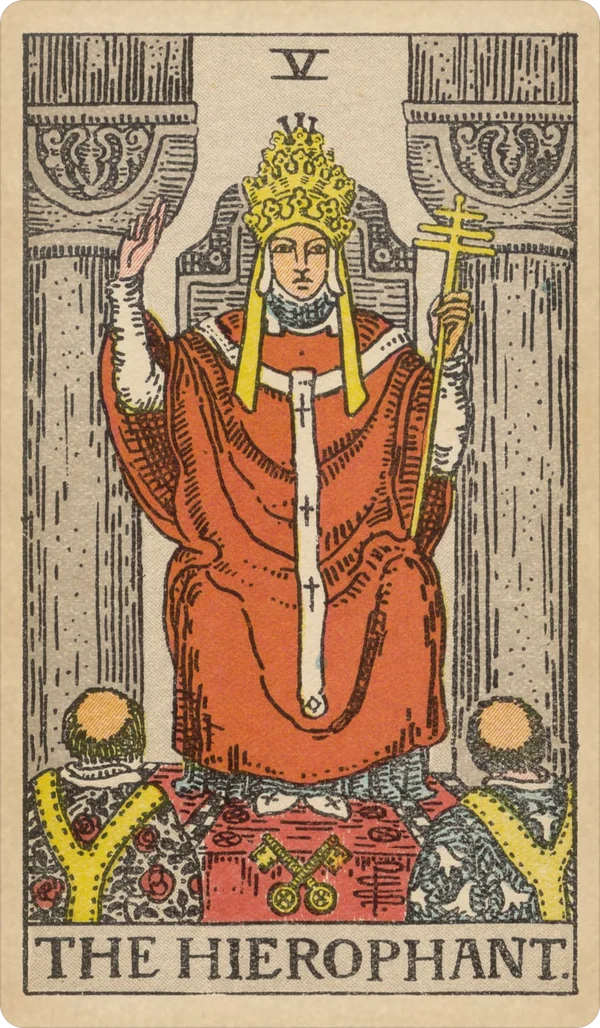
- A religious teacher in a red robe and a tall gold triple crown sits on a throne. A long white stole marked with small crosses hangs down the front of his robe.
- Action
- He raises his right hand with two fingers lifted in a sign of blessing and holds a gold staff topped with three crossbars in his left.
- Setting
- He sits between two gray stone pillars inside what looks like a temple or hall. Two figures with shaved crowns kneel before him with their backs to us.
- Color
- Red, gold and gray fill the card. One kneeling figure wears a robe patterned with red roses, the other a robe patterned with pale flowers.
- Detail
- Two crossed gold keys lie on the red carpet at his feet.
The Hierophant upright meaning
The Hierophant is a teacher facing students. His raised hand blesses, and the two kneeling figures listen. Notice that we see them from behind: we are in the position of the students too. This card asks what you are learning, from whom, and inside which tradition.
Upright, The Hierophant points to established paths. A school, a faith community, a professional training, a family custom, an apprenticeship. These structures carry knowledge that took generations to gather. There is real value in not reinventing everything. Sometimes the wisest move is to find someone who has done the thing before and ask them to show you how.
The crossed keys at his feet are often read as access. Traditions open doors: they give you language, rituals and a group of people who share your values. Belonging is a basic human need, and this card honors it. Weddings, graduations and ceremonies of all kinds fall under its light.
In a daily pull, consider where you might benefit from a mentor or a proven method. Also consider what rituals keep you grounded. A Sunday call with family, a morning practice, a recipe passed down. The Hierophant asks you to notice what you inherited and to choose, consciously, what you want to keep.
The Hierophant reversed meaning
In the reversed position, The Hierophant questions the rulebook. This can be healthy. You may be outgrowing a belief system, a family expectation or a professional norm that no longer fits who you are. Many people meet this reversal when they start asking, why do we do it this way?
Sometimes the reversed card points instead to dogma on the other side: a teacher, group or institution that demands obedience and punishes questions. Or it can show rebellion as a reflex, rejecting anything traditional just because it is traditional. The card invites you to tell the difference between thoughtful questioning and automatic resistance. Ask what you actually believe when nobody else is watching.
The Hierophant in love and relationships
Upright in love
In love, The Hierophant reflects commitment, shared values and the traditions around relationships. It may come up around engagement, marriage, meeting families or creating rituals together. It can also describe a relationship that works because both people want the same kind of life. If you are single, it may point to meeting people through a community you care about. The card asks you to notice which relationship traditions feel meaningful to you, and which you have simply absorbed from others.
Reversed in love
Reversed in love, The Hierophant can point to a relationship that does not fit the expected script, and that is not a problem in itself. It may reflect choosing your own structure as a couple, or facing pressure from family or community about who you love or how. It can also describe friction over values, such as different beliefs about money, faith or family. The card invites honest talks with your person about which rules you are following, and whose rules they really are.
The Hierophant as feelings
As feelings, The Hierophant reflects a wish for commitment, respect and doing things properly. If you pull it while thinking about a connection, notice whether you are seeking security through tradition: labels, milestones, approval from people who matter to you. It can also show deep respect or admiration for someone. Rather than read it as a statement of what another person feels, ask what values you want this connection to rest on and whether they are truly shared.
The Hierophant in career and money
In your working life, The Hierophant favors learning inside an established system. Formal training, certifications, joining a respected organization or finding a mentor who knows the industry. It also fits roles that teach, counsel or preserve knowledge. If you are pushing against company culture, it asks whether the rules protect something worthwhile before you discard them. With money habits, it may point to time-tested, conservative approaches rather than trends, and to seeking qualified advice when the stakes are high.
The shadow side of The Hierophant
The Hierophant's shadow is conformity that you mistake for your own choice. Many of us carry rules we never examined: what a good daughter or son does, what success looks like, which feelings are allowed. In shadow work, the card asks you to list a few of those rules and trace where each one came from. Some will still feel true. Others belong to someone else. There is also a shadow of needing approval from an authority before you trust yourself, waiting for the right teacher to give you permission. And there is the reverse shadow: rejecting every tradition so loudly that you never get to enjoy belonging. The two keys at his feet can unlock or lock. Notice which ones you are holding.
The Hierophant in yes-or-no questions
People often ask The Hierophant for a yes about marriage or big commitments. Tarot Habit does not use cards for yes-or-no decisions. The open question invites a real conversation with your partner, which is far more useful than a verdict from a card.
Instead of
“Should we get married?”
Try
“What do commitment and marriage mean to each of us, and which traditions do we want to carry into our life together?”
The Hierophant as advice
As guidance, The Hierophant says: learn from someone who has walked the path. Find a teacher, a book, a class or an elder and ask a real question this week. At the same time, notice one rule you follow automatically, and decide on purpose whether to keep it.
Journal prompts for The Hierophant
- Which beliefs did I inherit from my family or community, and which ones have I truly chosen?
- Who has been a real teacher or mentor in my life, and what did they give me that I still use?
- What small ritual makes me feel like I belong, and how could I give it more space?
The Hierophant with other cards
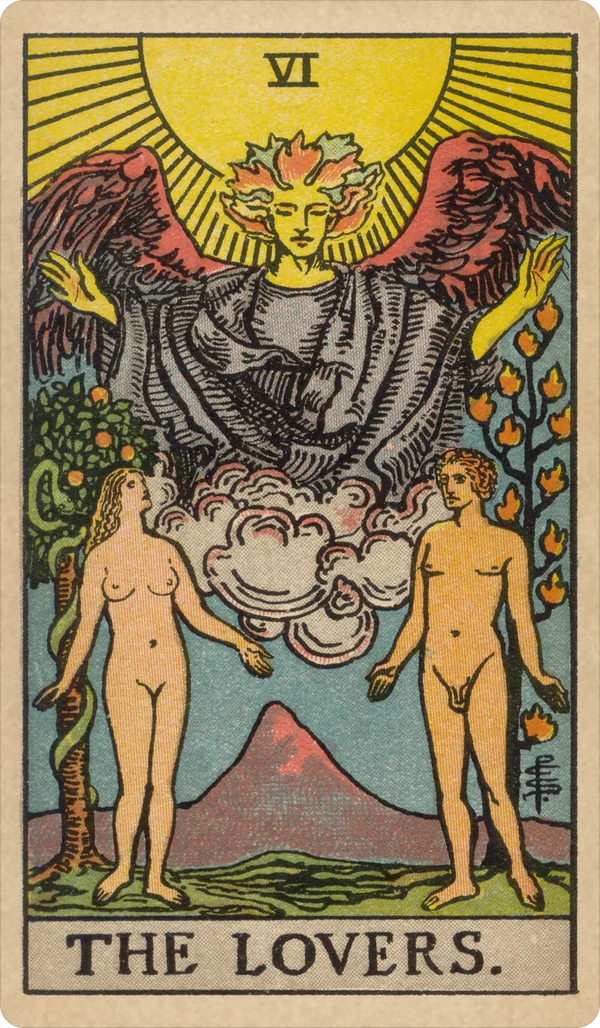
- The Hierophant and The Lovers
With The Lovers, the theme becomes values in a relationship. The pair asks whether a commitment is shaped by personal choice, tradition or both.
- The Hierophant and Three of Pentacles
With the Three of Pentacles, learning happens through teamwork and apprenticeship. This pair favors mentors and skilled collaboration.
- The Hierophant and The Fool
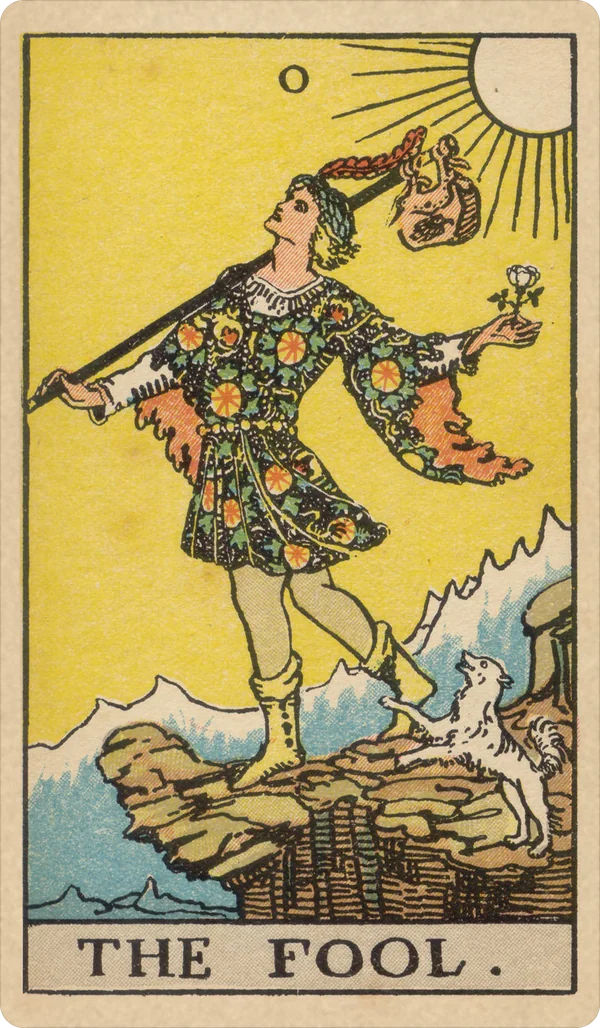
With The Fool, tradition meets fresh curiosity. The pair invites you to respect what has been learned while staying open to your own path.
- The Hierophant and Three of Cups
With the Three of Cups, community and celebration come forward. The pair often reflects gatherings, ceremonies and the joy of belonging.
The most common misreading of The Hierophant
A frequent myth is that The Hierophant is only about organized religion, so some people skip over it if they are not religious. In the 1909 deck the imagery is churchly, but the card speaks to any tradition, institution or teacher, including schools, workplaces and family customs. Another misreading treats it as purely negative, a symbol of control. It can be, reversed, but upright it honors learning and belonging.